Integration and Supporting Systems
7.1 Building Electrical System Integration
Lightning protection and earthing systems must integrate seamlessly with building electrical distribution infrastructure to provide effective protection without compromising power quality or system reliability. Integration points include service entrance equipment, distribution panels, branch circuits, and equipment grounding systems. Proper coordination ensures that lightning protection enhances electrical system safety while maintaining compliance with electrical codes and standards governing low-voltage installations below 10kV.
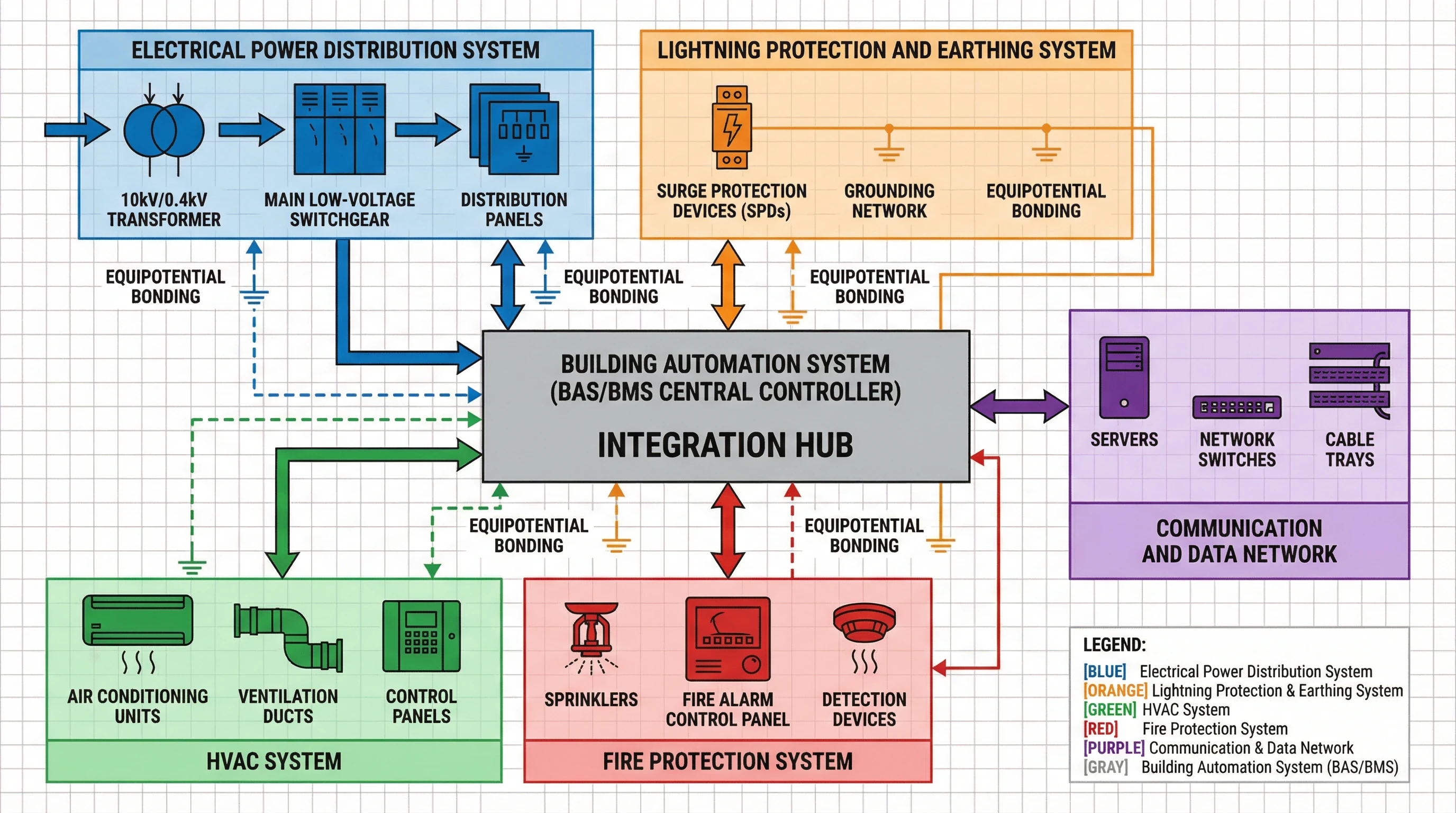
Figure 7.1: Low-Voltage Distribution System Integration Architecture with Lightning Protection and Supporting Systems
Service Entrance Coordination
The service entrance represents the primary interface between utility supply and facility distribution, requiring careful integration of lightning protection with metering equipment, main disconnects, and overcurrent protection. Level 1 SPDs install downstream of the main disconnect but upstream of distribution panels, with connection to the service entrance grounding electrode system. Installation must maintain adequate clearance from metering equipment to prevent electromagnetic interference while keeping SPD connection conductors short to minimize inductive voltage drop. Coordination with utility requirements ensures that SPD installation does not violate utility easements or interfere with revenue metering accuracy.
Transformer secondary connections in 10kV/0.4kV substations require particular attention to grounding and bonding arrangements. The transformer neutral point connects to the grounding electrode system through the main grounding conductor, establishing the system reference potential. SPD installation at transformer secondary terminals provides the first level of protection for the low-voltage distribution system, with ratings selected to accommodate the high available fault current at this location. Proper phasing and connection polarity verification prevents SPD damage or malfunction that could compromise protection effectiveness.
Distribution Panel Integration
Distribution panels throughout the facility require Level 2 SPD installation to provide intermediate protection between service entrance and equipment terminals. Panel-mounted SPDs install on dedicated mounting rails or directly on busbars, with connection conductors routed to minimize length while maintaining separation from sensitive circuits. Panel schedules must identify SPD locations, ratings, and connection details to facilitate future maintenance and replacement. Adequate panel space allocation during initial design prevents costly modifications when adding protection to existing installations.
| Integration Point | Voltage Level | SPD Type | Key Requirements | Coordination Issues |
|---|---|---|---|---|
| 10kV Service Entrance | 10kV | High-voltage arrester | Coordinate with utility, maintain clearances | Utility interface, metering accuracy |
| Transformer Secondary | 400V | Level 1 SPD (Type 1) | High Imax rating, low impedance grounding | Fault current coordination, neutral grounding |
| Main Distribution Panel | 400V | Level 1+2 SPD (Type 1+2) | Energy coordination, backup protection | Panel space, conductor routing |
| Sub-Distribution Panels | 400V/230V | Level 2 SPD (Type 2) | Voltage protection level, response time | Separation distance from Level 1 |
| Equipment Terminals | 230V | Level 3 SPD (Type 3) | Low Up value, minimal insertion loss | Equipment compatibility, installation space |
7.2 HVAC and Mechanical System Coordination
Heating, ventilation, and air conditioning systems present both challenges and opportunities for lightning protection integration. Metallic ductwork, piping, and equipment enclosures require bonding to the equipotential network, while control circuits need surge protection. Proper coordination prevents lightning-induced failures of HVAC equipment while avoiding interference with temperature control and air quality management functions critical to facility operation.
Metallic Infrastructure Bonding
HVAC ductwork creates extensive metallic networks throughout buildings that can couple lightning-induced electromagnetic fields if not properly bonded. Main supply and return ducts require bonding to the building grounding system at regular intervals, typically every 20-30 meters and at penetrations through fire-rated walls. Flexible duct connections employ bonding jumpers to maintain electrical continuity across non-conductive sections. Proper bonding prevents ductwork from becoming unintentional antennas that could induce voltages in nearby power or control circuits.
Chilled water, heating water, and refrigerant piping systems require bonding at building entry points and at intervals throughout the distribution network. Dielectric unions or insulating flanges used for corrosion control create electrical discontinuities that require bonding jumpers to maintain lightning protection effectiveness. Piping penetrations through exterior walls represent particular concern, as these locations experience high electromagnetic field intensity during lightning events. Bonding connections must accommodate thermal expansion and vibration without degrading electrical continuity.
HVAC Control System Protection
Building automation systems controlling HVAC equipment employ distributed sensors, actuators, and controllers connected by power and communication networks vulnerable to lightning-induced surges. Control panel power supplies require SPD protection appropriate for the supply voltage and controller sensitivity. Communication networks including BACnet, Modbus, and proprietary protocols need signal-appropriate SPDs that maintain data integrity while providing surge suppression. Sensor circuits for temperature, humidity, and pressure measurement benefit from protection at both controller input terminals and remote sensor locations.
7.3 Fire Protection System Integration
Fire detection and suppression systems represent life-safety critical infrastructure that must maintain functionality during and after lightning events. Integration with lightning protection systems requires careful attention to both physical protection of fire system components and prevention of false alarms that could result from lightning-induced electrical transients. Proper coordination ensures that lightning protection enhances rather than compromises fire system reliability.
Fire Alarm System Protection
Fire alarm control panels and associated detection devices require protection against power-side and signal-side surges. Panel power supplies benefit from dedicated SPD protection at the supply circuit, while initiating device circuits and notification appliance circuits require signal-appropriate protection that maintains circuit supervision functionality. Addressable fire alarm systems employing digital communication between panel and devices need SPDs compatible with communication protocol requirements including data rate, voltage levels, and current consumption.
Smoke detectors and heat detectors distributed throughout facilities connect to fire alarm panels through supervised circuits that monitor circuit integrity. Lightning-induced surges on these circuits can cause false alarms or damage to detection devices, requiring protection at both panel terminals and remote device locations in high-risk areas. Protection device selection must maintain circuit supervision functionality including end-of-line resistance monitoring and ground fault detection while providing effective surge suppression.
Suppression System Coordination
Automatic sprinkler systems employ metallic piping networks that require bonding to the equipotential network at building entry points and major distribution mains. Fire pump controllers and jockey pump starters need power circuit SPD protection appropriate for motor control applications, with ratings selected to accommodate motor starting currents and controller sensitivity. Water flow switches, tamper switches, and pressure sensors require signal circuit protection that maintains alarm functionality while suppressing induced transients.
7.4 Communication and Data System Integration
Modern facilities rely on extensive communication and data networks for business operations, building management, and security functions. These networks exhibit particular vulnerability to lightning-induced disturbances due to their low operating voltages, high-speed signaling, and extensive cabling that can couple electromagnetic energy. Effective integration of lightning protection with communication systems requires coordinated application of surge protection, proper grounding practices, and cable shielding techniques.
Structured Cabling System Protection
Structured cabling systems distributing voice, data, and video signals throughout facilities require protection at telecommunications rooms, equipment rooms, and entrance facilities. Main distribution frame (MDF) and intermediate distribution frame (IDF) locations employ rack-mounted or patch panel-integrated SPDs to protect network equipment and connected devices. SPD selection must maintain cable category performance specifications (Category 5e, 6, or 6A) while providing effective surge suppression, typically requiring insertion loss below 0.3dB and minimal impact on return loss and crosstalk parameters.
Outdoor cable runs connecting buildings or extending to remote equipment locations present elevated lightning risk due to their exposure and length. These cables require protection at both ends, with SPDs installed at building entry points and remote equipment locations. Fiber optic cables eliminate direct lightning coupling but require protection at media conversion points where electrical power and copper-based management interfaces remain vulnerable. Proper cable routing maintains separation from power circuits and lightning down conductors to minimize electromagnetic coupling.
Network Equipment Protection
Network switches, routers, servers, and storage systems require comprehensive protection addressing power supplies, network interfaces, and management connections. Equipment rack power distribution units (PDUs) with integrated SPDs provide convenient protection for multiple devices, though individual equipment-level protection may be required for critical systems. Network interface protection must accommodate high data rates (1Gbps, 10Gbps, or higher) while maintaining signal integrity parameters including bit error rate and latency. Management interfaces including serial console ports and out-of-band management networks require appropriate signal-level protection.
| System Type | Protection Points | SPD Requirements | Special Considerations |
|---|---|---|---|
| Structured Cabling | MDF, IDF, building entrance | Category-rated, low insertion loss | Maintain cable performance specs |
| Network Equipment | Power supply, data ports, management | Multi-port protection, PoE compatible | High-speed data compatibility |
| Wireless Systems | Access points, antenna feedlines | RF-compatible, weatherproof | Outdoor equipment exposure |
| Security Systems | Cameras, access control, intercoms | Video-compatible, multi-circuit | 24/7 availability requirement |
| Building Automation | Controllers, sensors, actuators | Protocol-compatible, low capacitance | Distributed architecture, long cable runs |
7.5 Renewable Energy System Integration
Photovoltaic solar systems and other renewable energy installations require specialized lightning protection considerations due to their rooftop locations, extensive DC cabling, and inverter electronics. Integration with building lightning protection systems must address both the elevated strike risk from rooftop arrays and the vulnerability of power electronics to surge events. Proper design ensures that renewable energy systems contribute to rather than compromise facility sustainability and resilience goals.
PV Array Protection
Rooftop photovoltaic arrays require integration with building air terminal systems to prevent direct strikes to solar panels and mounting structures. Air terminals positioned above array perimeters provide protection when designed using rolling sphere method with appropriate protection level. Array mounting structures require bonding to building grounding systems through multiple connections that accommodate thermal expansion while maintaining low-impedance paths. Module frames and mounting rails connect to equipotential bonding networks to prevent dangerous potential differences during lightning events.
DC cabling between arrays and inverters presents particular vulnerability due to the long conductor runs and exposure to electromagnetic fields. SPDs rated for DC applications install at both array and inverter ends of DC circuits, with ratings selected for system voltage (typically 600-1000VDC) and appropriate energy handling capability. Proper DC SPD selection requires attention to polarity, continuous operating voltage, and coordination between array-side and inverter-side protection. Cable routing maintains separation from AC power circuits and employs metallic conduit for electromagnetic shielding where practical.
Inverter and AC Integration Protection
Solar inverters converting DC power to AC for building use or grid export require protection on both DC input and AC output circuits. DC-side protection addresses surges coupled from array cabling, while AC-side protection coordinates with building electrical system SPDs to provide comprehensive coverage. Inverter communication and monitoring circuits connecting to building networks or cloud services require signal-appropriate protection that maintains data connectivity while suppressing transients. Proper grounding of inverter enclosures and integration with building equipotential bonding prevents ground loops while ensuring effective surge current paths.